Saturday, May 27, 2006

Harvesting a Worm Bin

HARVESTING A WORM BIN FOR CASTINGS


Harvesting a worm bin for worms and harvesting for castings are two different things. If you are not growing worms as a commercial operator (as I'm assuming most if not all of you are not) then harvesting worms is as simple as taking material off the top of the worm bin which will be full of worms and sharing them.

However, if you are harvesting castings, which pretty much anyone growing worms will do at some point, then the process as I do it is revealed below.


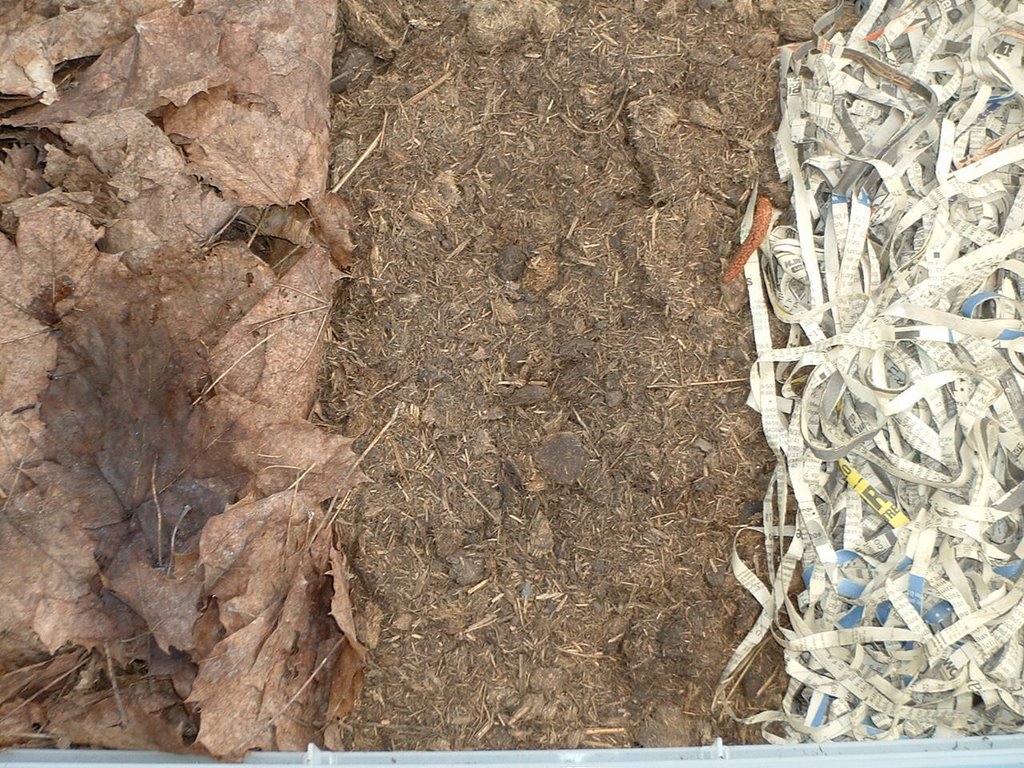
Photo 1 shows the bin before I get started. Along the sides you can see the lines of where the product started in November when I move as much product from the bottom of my bins to one end to cure. The material continues to compost and dry. As the material finishes composting the volume decreases. Here is a shot of what the material looks like that I am harvesting from the worm bin.

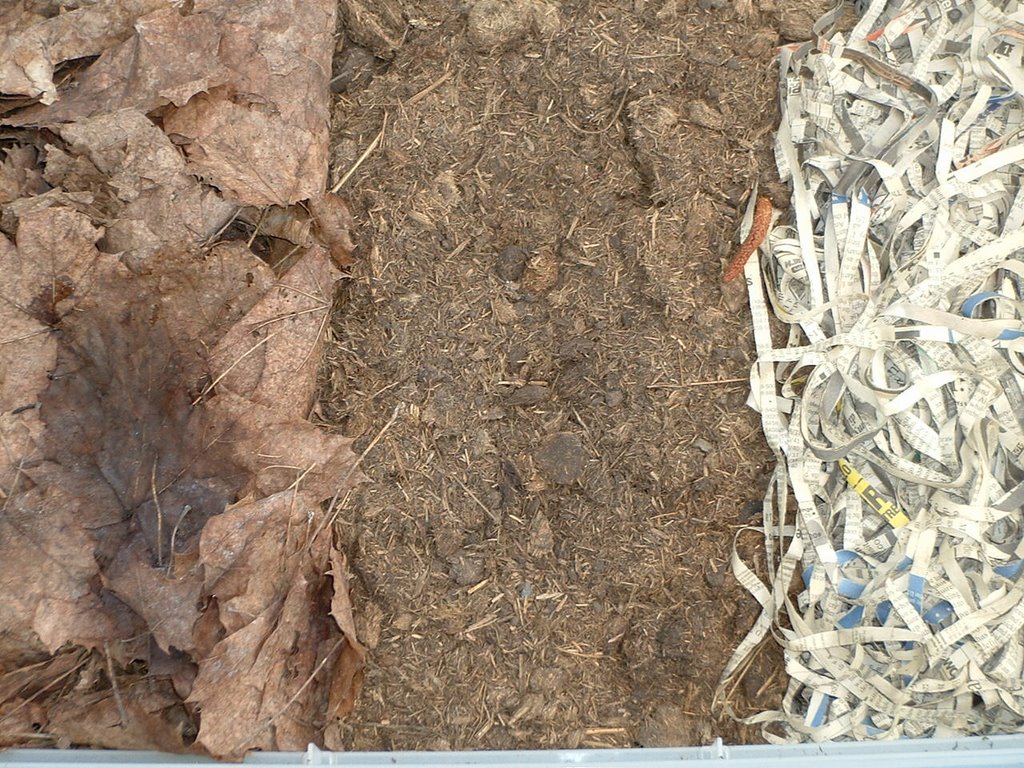
On the right is the material I start with and on the left the finished product. Along with the leaves, manure, and shredded paper, I feed the worms food waste.
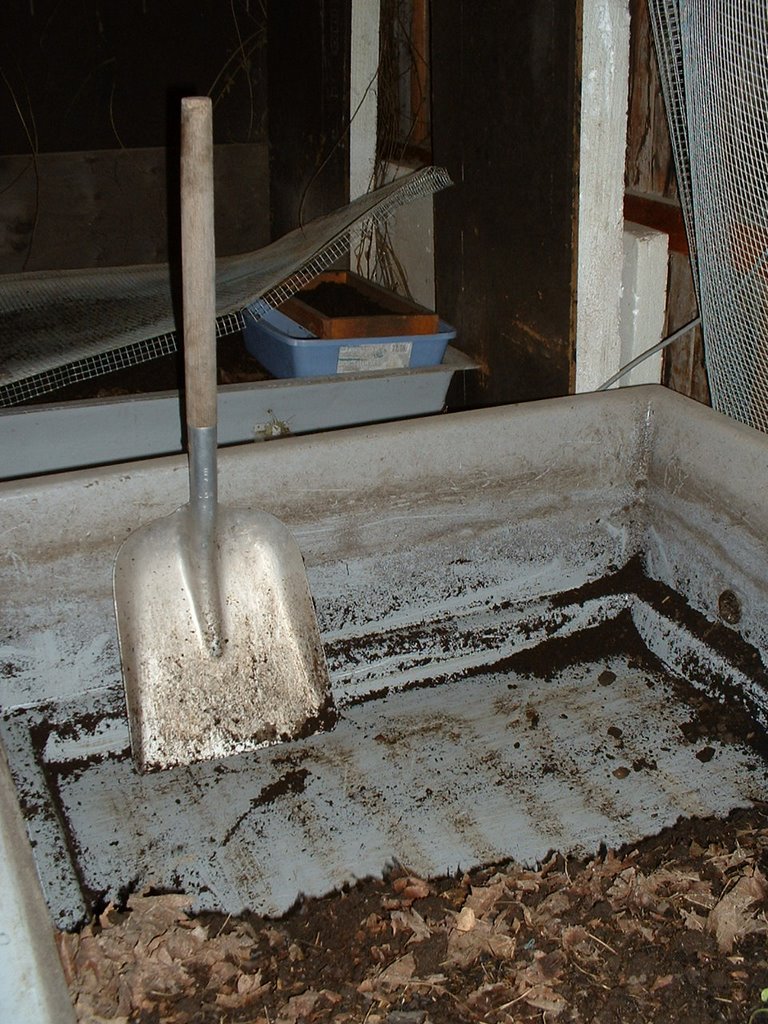


The first thing you do to harvest your bin is to get all the finished material out of the bin. Then you start moving the fresh bedding with most of the worms either out and into another holding bin, or in my case, I just work my way down the bin, piling the fresh material with the worms in it at the end of the bed.


This is the fresh bedding from the top filled with worms being piled down onto the top of the oposite end of the bed.
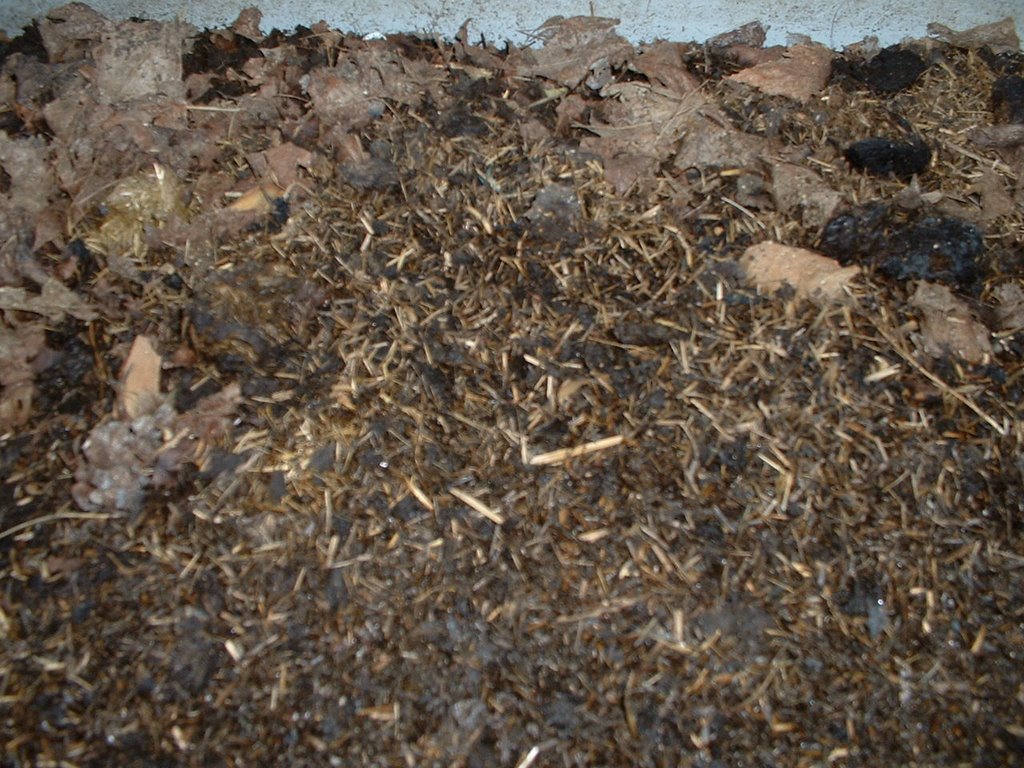


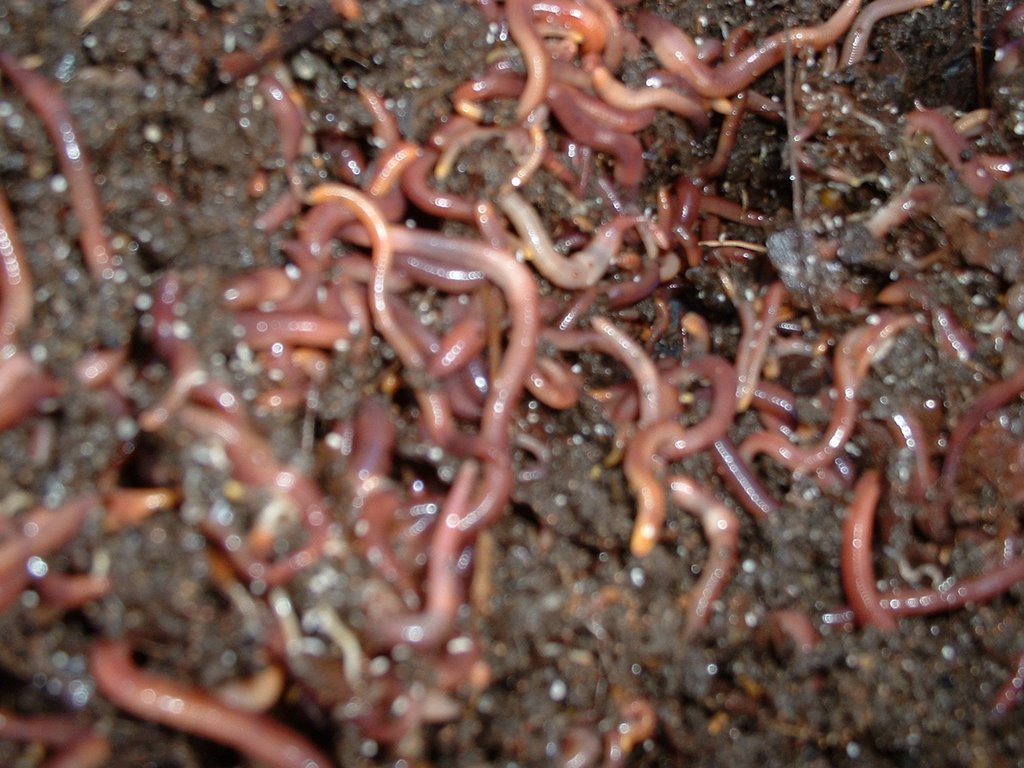
The picture above shows the layer of worms in the top layer of material. The finished material will be in the bottom 1/3 t0 1/4 of the bed. It depends how long the composting has been taking place since last harvest.
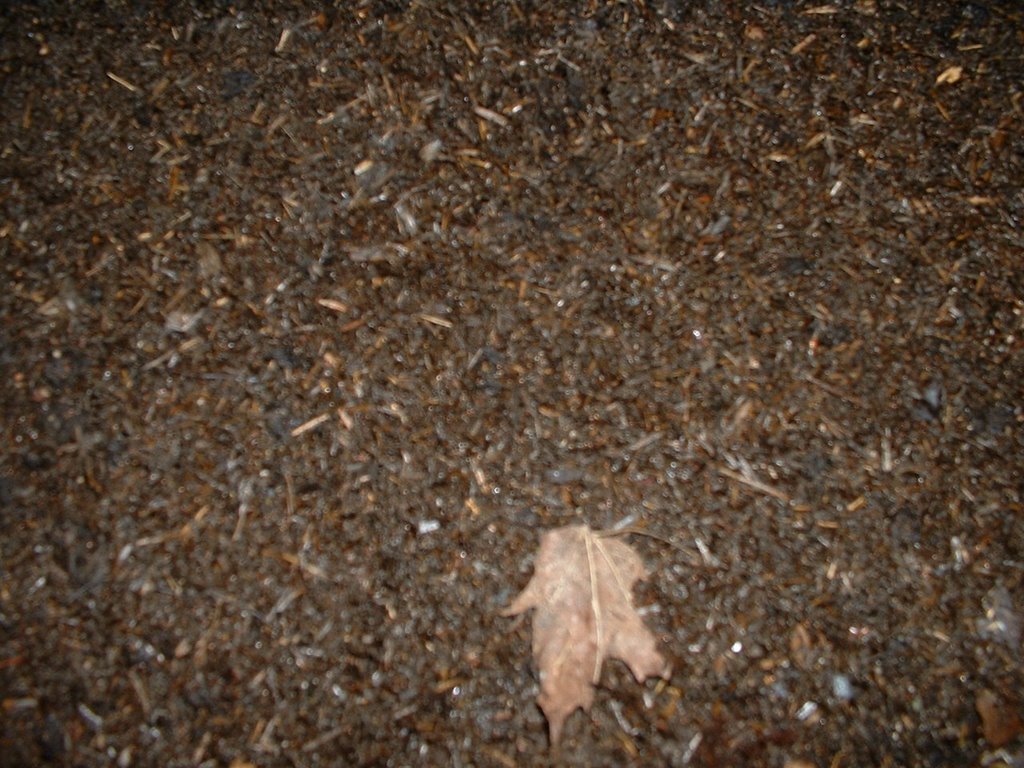
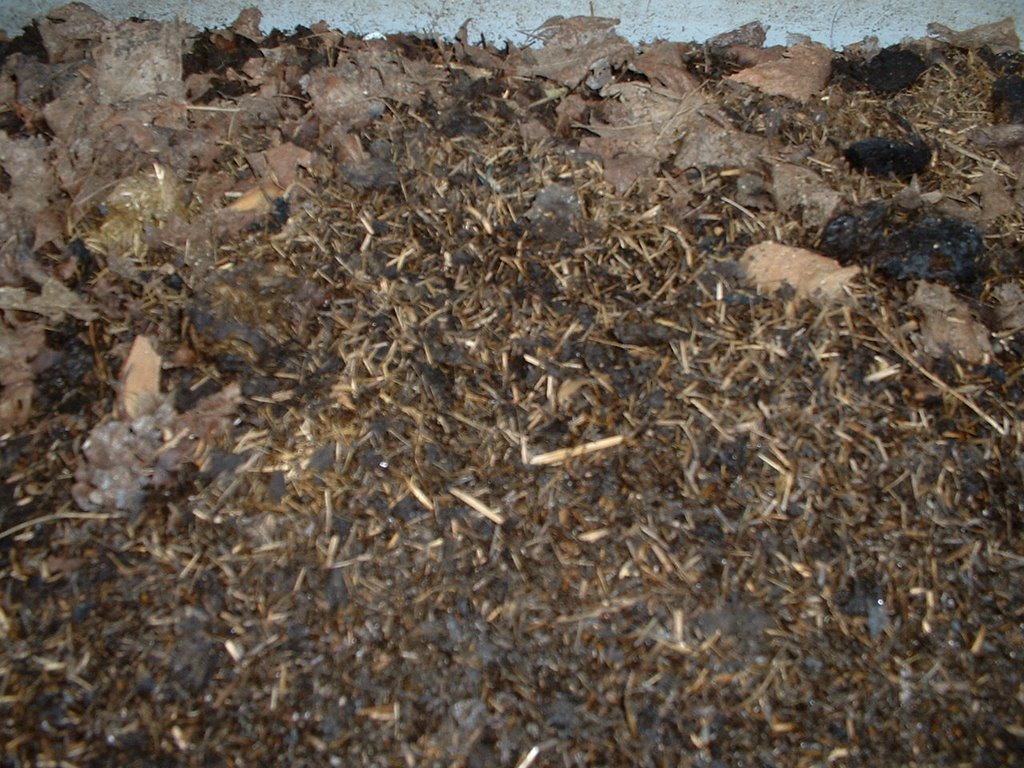
This picture shows the center of the composting area before it was disturbed, which is surrounded by uncomposted material such as the picture directly above this one.

This material is full of worms and will stay in the bin to populate the new bedding to be added.


The finished material at the bottom of the bin will be pulled down to the empty part of the bin, filling that end up.

The material with the worms in it will then be put into the now vacated portion of the bin, leveled out and new bedding material will then be placed on top. This new material will need to be smoothed out, watered, and watched to make sure the moisture level is brought up to where the worms like it. This may take a few days depending on how wet your bedding material was when it was initially added to the bin.

There, you are done. The finished material can then go into another holding area to continue drying if need be, screened if desired, and used for whatever purpose you have for it.

More pictures will be posted to further explain this process. Email me if you have questions or feel free to post a comment to benefit all.]

Happy Harvesting,

Christy
MotherEarth'sFarm.com
Where good things come from for body and soil.

Wednesday, May 03, 2006

Worm Bin Composting | After the Bin, What's Next

~~~Leaves~~~~~~~Manure~~~~~~~Paper~~~


Once you have made your decisions about your bin, including location then the next issue to address is the bedding material. These are some of the materials I use for my bedding material.

I am lucky enough to live in an area where I have a neighbor who has a horse. Any manure is good as long as it has composted. You don't want the bedding to heat up, it will kill the worms. An excellent choice is cow manure, pig manure, llama, and/or rabbit. Another name for redworms is manure worm. That's because manure is a natural habitat for them.
I also use leaves. Worms love rotting leave. Put them through the lawn mower or a shredder to shred the leaves up.

The last thing I use a lot of is shredded newspaper. I lay it on thick on top of the bin and wet it down. It takes a few wettings to get all the paper fibers saturated. Once the paper is evenly wet it lays on the bin like a blanket. You can pull it back and feed under it. Then when you want to see what the worms are doing you just pull back the blanket. Eventually the worms will work their way up into the newspaper and start consuming it. There will be a time you will pull the blanket back and it will fall apart. That's when you work it into the bedding and start over.

The variety of bedding helps keep a wide spectrum of bacteria in the end product. Add a variety of food stock and you have a bacteria powered product to add to your soil.

So get out there and start gathering bedding material.

If you can't find any of these there is a product called Coir. It is made from coconut shells. It is much like peat moss but it is a renewable resource unlike peatmoss.

Christy
wormn@motherearthsfarm.com
Where good things come from for the body and soil.

Friday, April 28, 2006

Worm Bin Composting | Start with the Bin

When you decide to compost with worms, that initial decision is the first of many. Aspects of what you want to accomplish will have an effect on what you finally do.


  • Will you compost outside with a conventional compost pile and add worms to that?
  • Will you compost in worm bins?
  • If you compost in worm bins, what size will they be?
  • Are you composting to handle your organic waste, for the by product, or both?
  • Do you want the bin in the house, the garage, or out-doors?
  • Do you want a plastic bin, a wood bin or perhaps you want to be creative with something out of the ordinary.

Whatever you decide, there is a plethora of materials out there to use.

I am a commercial grower and therefore my main bins are of commercial size. They are 4'x8' Fiberglas heated bins. Here is a picture of one:

Anyone who is a serious gardener and recognizes the benefit of using worm castings in their soil building program must also recognize that anything smaller than a 4'x8' bin would be insignificant. A bigger bin is easier to work and produces a great deal more product. The Fiberglas are nice but expensive. You could build one out of plywood quite easily and coat it in paraffin wax to help preserve the wood. In this way you can customize the size to fit your needs and space requirements.


If you want to do an in-door bin, or an in-bin as I call them here is a sample of that:

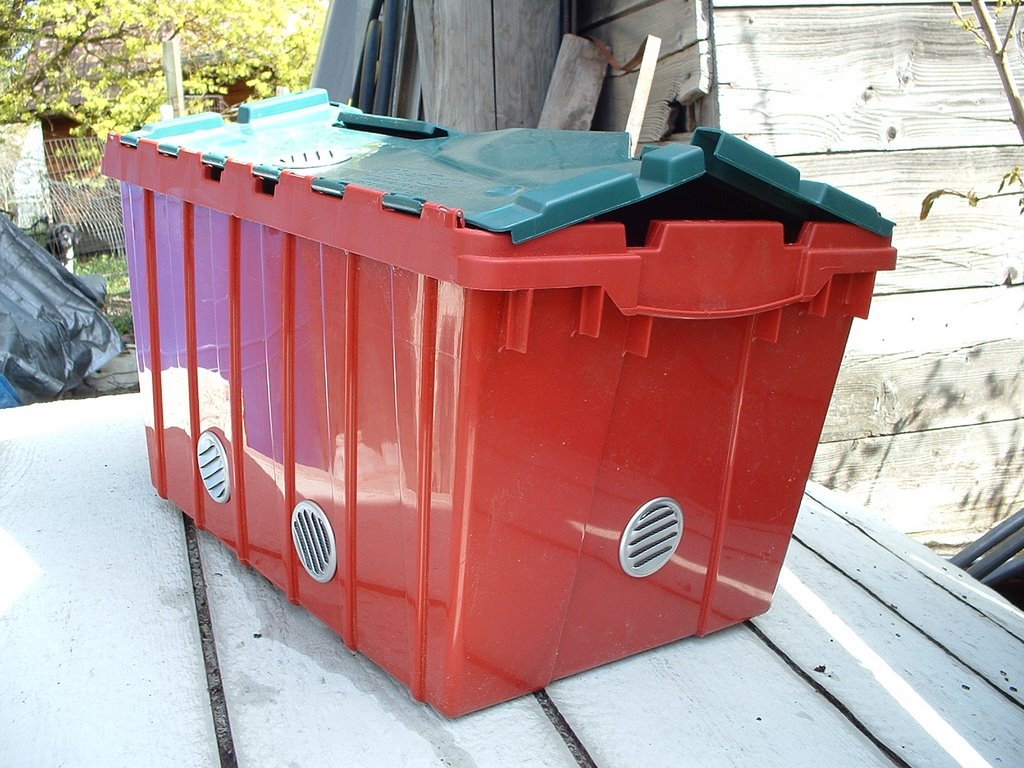
These can be made out of any plastic tote. It simply needs to be a solid color, not opaque as the worms do not like light and would not be happy in a bin that allowed light in all around. I like the attached lid of this bin and the hard plastic. Vents can be found at a builders supply store. Vents must be put in the top and the bottom as well as the sides. You can't have too many vents as long as you do not compromise the integrity of the tote. You need to be able to move the bin.

I have had people ask me about using old freezers, bath tubs, I heard of one person modifying an old phonograph to be a worm bin, and another had the bin in the window seat of the kitchen window. Really, you can use anything that will hold bedding material and will allow for the escape of excess moisture and the circulation of air. The less accommodating to these needs the more maintenance will be required.

Next I will show you the tools I use the most in working my bins. In the smaller in-bins the main tools are your hands and some rubber gloves.

Happy worming,

Christy - Wormnwomn
wormn@motherearthsfarm.com

Monday, April 24, 2006

Worm Bin Composting | The Season Begins

While I do grow my worms in heated bins which keeps them active right through winter, with the warmer weather of Spring the activity in the worm bin picks up and the work begins anew.

In November I work to get as much of the finished material out of the bin so that I can fill the it up with as much fresh material fresh material as I can. Since I am somewhat of a fair-weather worm farmer, when the weather outside gets real inclimate I tend to hibernate a bit. Therefore, the worms tend to get a little more neglected. They are okay though because there is plenty of fresh bedding to get them through. But as the weather changes the fresh stuff disappears and the time draws near that I must once again start removing finished material and making room for more fresh bedding. It is time to start feeding daily again and getting the worms fat and happy.

It's wonderful how nature works, as right when it's time to start feeding the compost bin again with all the winter kill that covers the garden, the worms are ready to get busy too. Most of the material that goes in the compost bin now will be carbon material and will require quite a bit of moisture. Layer it with as much food waste as you can come up with and the worms will be happy.

Saturday, March 25, 2006

Worm Bin Composting | Why are castings the best soil amendment?

Worm Bin Composting Why are castings the best soil amendment?

VERMI-CAST is a 100% organic fertilizer, and is completely safe to all plants, animals, humans and our environment in any concentration. It is the richest natural fertilizer known to humans. Plant growth trials at Ohio State University have shown that as little as 5% (by volume) produces “unique and remarkable plant growth responses.” The recommended rate is 10-20%. Unlike animal dung and artificial fertilizer it is absorbed easily and immediately by plants and will not burn . It also enhances the ability of your soil to retain water and even inhibits bacterial and fungal diseases. It will improve soil structure and aeration dramatically. It consists of thousands of durable torpedo-shaped pellets that resist compaction, creating a spongy quality to the material.


VERMI-CAST has not been sterilized and therefore contains a highly active biological mixture of bacteria, enzymes, and microbes. This material stays active for a long period of time. The microbial life in the castings are much better at transforming nutrients into forms readily available to plants than those you find in conventional compost- because the microbes in compost are thermophilic- so the microbial spectrum is quite different and much more beneficial in castings. This is all according to Dr. Clive Edwards, the world’s leading authority on vermicomposting.
The real value of Vermi-Cast lies in the soil structure, water holding capacity, the retention, drainage, pathogen control, and control of damaging fungi and bacterial life in the soil. The worm castings actually contain more bacteria than are found in the worm gut or in the organic matter the worm consumes. Microbiological activity is promoted in the soil, which is very beneficial for the environment your plants are growing in.
Vermi-Cast helps replenish biological diversity in the soil. According to George Hahn of California Vermiculture, “castings provide the biological engines of the soil.” They are the best source for a complete soil food web. A soil food web consists of thousands of biological species. With them you have a healthy soil. The result of this food web is a healthy cycling of soil nutrients.

Worm bin composting - why are castings the best soil amendment? They are simply put, nature's answer to replenishing the soil.

Sunday, March 12, 2006

WORM BIN COMPOSTING|What are castings used for?

Worm Bin Composting - What are castings used for?


Because of its nutrients, bacteria, humus, and soil building qualities, VERMI-CAST can be used in every application imaginable in the garden, greenhouse, and potted plants. Use it when planting trees, shrubs, flowers, and vegetables. Use it as a top dressing to feed plants already in a pot or in the ground. VERMI-CAST will never burn, so you don't have to worry about using too much. However, you get maximum growth improvement somewhere in the lower levels of concentration, 5-20%, not with 100%.

Worm bin composting - what are castings used for? Absolutely any time you want to add quality soil amendment to any plant whether it be in a pot, container, or in the ground.

Happy worming.

Christy
http://motherearthsfarm.com
Where good things come from for the body and soil.
Subscribe to my new newsletter - "Worms In My Garden." Go to my website now. Request my free Worm Bin Composting Mini-Course.

Sunday, March 05, 2006

WORM BIN COMPOSTING|What are castings?


Worm Bin Composting - What are castings?


I call my castings Vermi-Cast.

What is Vermi-Cast?
We all know the advantages of having earthworms in our gardens. We are thrilled to see these little creatures doing their thing in our soil, and even relocate them when we find them so they will be where they will do us the most good. But did you know that there are more than 3000 species of earthworms, and of those only 6 species are important for improving our soil.
VERMI-CAST is the end product of the hardest worker of them all in worm bin composting – Eisenia fetida, also known as the “red wriggler”, “manure worm”, and “compost worm”. These earthworms produce castings or worm manure, which is the best fertilizer on Earth. It is extremely versatile as it works as a plant food, soil conditioner, and microbial activity enhancer for virtually any type of plant that grows.
VERMI-CAST is a worm bin composting end product unique to VermiCulture Northwest in that it is 95 – 98% pure castings. Most of your other worm bin composting products are a pulverized mixture of castings and partially decomposed organic matter. VERMI-CAST is processed through a fine screen to filter out the excess compost, leaving a very fine, moist product full of nutrition and beneficial bacteria that will produce amazing results in your garden, greenhouse and potted plants.
Worm bin composting - what is castings? Simply the best soil amendment you can use in any application.
Learn more about worm bin composting and how it's a perfect partner in your organic gardening by subscribing to my new newsletter, "WORMS IN MY GARDEN." More information to follow about this.
Happy worming and successful gardening,
Christy

Wednesday, March 01, 2006

Worm Bin Composting|An Organic Choice

Worm Bin Composting - An organic choice for your garden.


We have known for hundreds of years that earthworms are the best way to improve plant growth and increase yield. Earthworm castings are a wonder product of Nature and will outperform any other organic product or chemical product available.

Let's talk about what plants need, and how worm bin composting can create a product that will meet those needs.


Plants need certain nutrients in fairly large quantities for them to be healthy. These include: Carbon, hydrogen and oxygen (which they get from air and water in photosynthesis); nitrogen, phosphorous, potassium, magnesium and calcium (which they are meant to get from the nutritious soil); iron, zinc, copper, manganese, boron, and molybdenum are among the other trace elements that are vital to a plants well being and growth, if in smaller quantities.

Soil which is rich in composted material - like leaves, manure, and straw...and tilled in cover crops like buckwheat, hairy vetch, rye, etc. will have these nutrients in abundance. Add a high-quality vermicompost rich in beneficial bacteria and you have what's necessary to release from your soil exactly what the plant needs when the plant needs it.

Artificial fertilizers bypass the soil-living creatures which are vital to the natural chain of organic soil conditioning and plant fertility, moving straight to the root of the plant. They supply a limited range of plant foods, which dissolve quickly in soil, so they are all available at once. This means that plants can take up too much of one nutrient (such as nitrogen which leads to sappy growth, making the plant more prone to pests and diseases), and not enough of another (plants fed with too much potassium, for example, get magnesium deficiency and turn yellow). What the plant does not use is then often washed out of the soil, wasting resources and polluting the environment. Artificial fertilizers don’t contain all the nutrients required for healthy plant growth, meaning the soil is depleted of these nutrients if not replaced.

So get out there and start layering on some organic material, plan your next cover crop, and get started worm bin composting. It's the answer to successful gardening.

Worm Bin Composting - An organic choice for your garden.

Wormnwomn (that's me, Christy)
Mother Earth's Farm
http://wormbincomposting.blogspot.com

Tuesday, February 28, 2006

Worm Bin Composting|A Natural Choice

Worm Bin CompostingA natural choice

If you are a gardener you garden because you love it and you love the results...flavorful vegetables, beautiful flowers, a yard that is the envy of the neighborhood. Worm bin composting can help you achieve these goals faster and better with the added benefit of disposing of your organic waste in a timely and economical way. It's a natural choice for gardeners to make.

If you have never heard of worm bin composting and the resulting vermicompost, then now is the time to discover its secrets. When you go to Mother Earth's Farm you will lay claim to all the information you need to become a successful worm farmer.

Studies have shown that worm bin composting produces a product that will help build the quality of your soil not just give your plants a chemical shot in the arm. Worm bin composting replenishes the soil the way Nature intended. It is a simple miracle of nature that will bring great rewards to those who desire to learn the mystery behind worm bin composting.

Do it now. Learn about worm bin composting.

Make your gardening better.

Christy
Worm Bin Composting at Mother Earth's Farm

Monday, February 27, 2006

Worm Bin Composting Produces Superior Product Over Conventional Composting

Worm Bin Composting - Let's think about this a moment. Worm bin composting uses worms to do the composting. Therefore the temperatures in the bin must be able to sustain the life of the worm. These temperatures, ideally are between 68 and 72 degrees celsius. The worms can handle degrees below and above these temperatures but not without effecting the speed at which your worm bin composts. With temperatures reaching the extremes of freezing or 90 degrees celsius the worms will start to die. In a conventional compost bin the temperatures climb much higher than the ideal temperatures in your worm bin. These high temperatures kill everything, good and bad. Therefore, when comparing the two systems, worm bin composting and conventional composting, the bacterial life present in the worm bin composting system has a wider variety of beneficial organisms. This makes the product from your worm bin composting system a superior product, as it is the beneficial bacteria which is valuable when added to the soil as a soil amendment.

Some of you might worry about worm bin composting not reaching temperatures high enough to kill pathogens. Studies have shown the worm gut to be most astonishing.

  • Pathogens Removed Through Vermistabilization: "[Dan] Holcombe reported that tests performed on worm-worked material originating as bio-solids waste showed 'no detect' on such pathogens as E. coli and Salmonella as well as some enteric viruses. Not only is this report significant, but the process of vermistabilization (as Holcombe refers to it) means that vermicompost does not become inoculated with harmful airborne bacteria when exposed to unprocessed waste in close proximity." Casting Call, Vol. 1, No. 2 Casting Call is a bimonthly newsletter put out by Peter Bogdanov at Vermico.com. I highly recommend it to anyone who is interested in what is going on in the Vermiculture Industry.

So make yourself some better compost and start worm bin composting.


Happy Worming!
www.motherearthsfarm.com

Worm Bin Composting

Welcome to my Worm Bin Composting blog. Here you will learn about Worm Bin Composting and why Worm Bin Composting is something every gardener should be doing no matter what size garden you have.